Here is an article written from the point of view of a student’s parent who is an economist. Very interesting read for a teacher and relevant information for those currently engaged in private music instruction of any kind. It talks about the expectations of parents in regards to make-up lessons and the internal dilemma of the teacher. Check it out!
Up this week is a wonderful example displaying the use of extended techniques, specifically prepared piano. Prepared piano is when you introduce foreign objects into the piano in order to get different sounds (kids, do not try this at home!). Listen to the first video and then the second. In the first, you can hear violins, violas, cellos, and basses plucking the strings on their instruments to give a light, bouncy sound. Then you hear a very legato voice enter. In the second recording, the piano duo inserts an object into the piano to cause the notes to deaden more quickly. Even though the instruments used are completely different, they both achieve a similar sound and effect.
Composer Biography
March 4th, 1678-July 28th, 1741
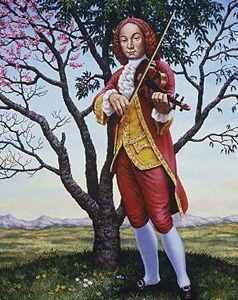
Antonio Vivaldo was born in Venice, Italy during the Baroque Period (1600-1750) in music. His father helped him learn to play the violin, often performing together. Continuing with his music study, Antonio also became a priest and became known as the “Red Priest” because of his red hair. He spent most of his time writing music and taught at an orphanage for girls. Vivaldi is often considered the best Italian composer of his time. He wrote concertos, operas, church music and many other compositions. He is most well known for his set of concertos called The Four Seasons.
Questions
During which period of music did Antonio Vivaldi live?
Define prepared piano.
What instrument is featured in each of Vivaldi’s Four Seasons concertos?
Welcome to the third listening assignment for students of the Drummond Piano Studio. This week we will be looking at a theme and variations composed by Ludwig van Beethoven based on the Turkish March theme. For those you who are new to the Drummond Piano Studio listening assignments, I will choose a recording for you to listen and I will write a few short paragraphs about the piece, composer, and performer as they relate to music history. Then you will see 2-3 questions that you must answer before you come to your next lesson. For younger students, have your parents help you. Remember to listen to these assignments with as few distractions as possible.
Theme and Variations Op. 76 “Turkish March”
Theme and Variations is a compositional technique where music material (theme) is repeated in an altered form (variation). It can be altered in many different ways such as changes in harmony, melody, counterpoint, rhythm, timbre, orchestration or any combination of these. This particular set of variations was composed in 1809 and consists of the theme plus six variations. You will notice how each variation sounds different but there is always material that is used from the original theme to tie everything together. It moves from a stately opening theme to a flowing string of sixteenth notes and ultimately returns to the main theme just when you can barely recognize it anymore. Beethoven composed 21 sets of theme and variations throughout his life.
Composer Biography
baptized December 17th, 1770-March 26th, 1827
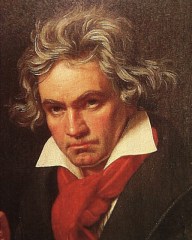
Ludwig van Beethoven, as we learned last week, is one of the great “Three B’s” to come from Germany, specifically the city of Bonn. He served as an important link between the Classical Period (1730-1820) and the Romantic Period (1815-1910) of music. His life and works are generally split into three main periods: early, middle, and late. In each period, you can see in his music a progression from highly classical to more romantic compositions, ultimately influenced by his personal struggle with deafness. In the last decade of his life, Beethoven was almost completely deaf and yet produced some of the most brilliant and heroic compositions the world had ever heard.
Questions
Who did Ludwig van Beethoven study piano with after moving to Vienna, Italy?
How many piano sonatas did Beethoven compose throughout his life?



 Drummond Piano Studio