Here is an article written from the point of view of a student’s parent who is an economist. Very interesting read for a teacher and relevant information for those currently engaged in private music instruction of any kind. It talks about the expectations of parents in regards to make-up lessons and the internal dilemma of the teacher. Check it out!
Up this week is a wonderful example displaying the use of extended techniques, specifically prepared piano. Prepared piano is when you introduce foreign objects into the piano in order to get different sounds (kids, do not try this at home!). Listen to the first video and then the second. In the first, you can hear violins, violas, cellos, and basses plucking the strings on their instruments to give a light, bouncy sound. Then you hear a very legato voice enter. In the second recording, the piano duo inserts an object into the piano to cause the notes to deaden more quickly. Even though the instruments used are completely different, they both achieve a similar sound and effect.
Composer Biography
March 4th, 1678-July 28th, 1741
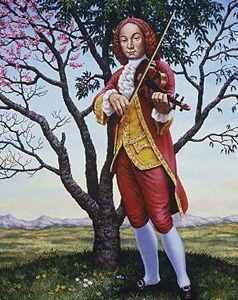
Antonio Vivaldo was born in Venice, Italy during the Baroque Period (1600-1750) in music. His father helped him learn to play the violin, often performing together. Continuing with his music study, Antonio also became a priest and became known as the “Red Priest” because of his red hair. He spent most of his time writing music and taught at an orphanage for girls. Vivaldi is often considered the best Italian composer of his time. He wrote concertos, operas, church music and many other compositions. He is most well known for his set of concertos called The Four Seasons.
Questions
During which period of music did Antonio Vivaldi live?
Define prepared piano.
What instrument is featured in each of Vivaldi’s Four Seasons concertos?


 Drummond Piano Studio